 Send Email
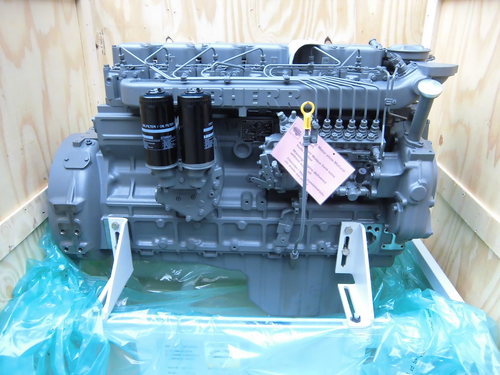
Product Details:
- Product Type Diesel Engine
- General Use Excavator (Liebherr R944)
- Material Cast iron block, steel components
- Type Engine
- Moving Type Stationary (for installation on excavator)
- Capacity Approx. 7.96 L (displacement)
- Speed Rated 1800 RPM
10000.00 - 15000.00 EUR () /Piece
X
Liebherr R944 10117783 Diesel Engine Price And Quantity
- 10000.00 - 15000.00 EUR ()/Piece
- 1 Piece
Liebherr R944 10117783 Diesel Engine Product Specifications
- Diesel Engine
- N/A (engine only)
- About 1200 kg
- Water cooled
- N/A (engine only)
- N/A (engine only)
- Excavator (Liebherr R944)
- Yes (Electronic Engine Management)
- Rated 1800 RPM
- Turbocharged, Direct Injection, Emission-optimized
- N/A (engine only)
- N/A (engine only)
- Cast iron block, steel components
- Stationary (for installation on excavator)
- N/A (engine only)
- N/A (depends on excavator configuration)
- N/A (depends on excavator installation)
- Yes (auto engine control functions)
- ECU (Electronic Control Unit)
- Yellow/Grey
- Max. 1050 Nm @ 1500 rpm
- Engine
- Approx. 1645 x 960 x 1370 mm (varies with configuration)
- N/A (engine only)
- Approx. 7.96 L (displacement)
- Closed system
- Electric Start 24V
- 210 kW (282 hp) @ 1800 rpm
- Longitudinal
- 6 in-line
- Approximately 35 liters
- D936 A7 (Liebherr 10117783)
- 500 hours (oil change)
- Common Rail Direct Injection
- EU Stage IIIA / Tier 3
- 122 mm x 142 mm
- Approx. 97 dB(A) @ 1 meter
- Forced Lubrication with oil cooler
- Turbocharged, Aftercooled
- 24V, 80A
Liebherr R944 10117783 Diesel Engine Trade Information
- Shanghai
- Paypal, Letter of Credit (L/C), Western Union, Letter of Credit at Sight (Sight L/C), Telegraphic Transfer (T/T)
- 3-5 Days
- Yes
- Sample costs shipping and taxes has to be paid by the buyer
- Original Liebherr package
- Western Europe, Australia, North America, Eastern Europe, Middle East, Central America, South America, Asia, Africa
- All India
Product Description
Liebherr R944 10117783 Diesel Engine
Established in 1949,Liebherr is the world's leading manufacturers of construction machinery, and is approved supplier in many other fields of technological innovation in the consumer product and service. Their main products including crane, large mining and earthmoving equipment, port equipment, heavy off-road vehicles, aircraft parts and commercial refrigerator etc.
Because we have the sole purchase representative in Germany and a large of inventory, we can supply liebherr genuine spare parts at best price and quick delivery time.
High-Performance Diesel Engine for Excavators
The Liebherr R944 Diesel Engine D936 A7 combines advanced engineering with practical features for the heavy-duty requirements of excavators. With a robust cast iron block, turbocharging, common rail direct injection, and a modern ECU, this engine delivers consistent power and efficiency. The water-cooled system and forced lubrication ensure reliable operation even under tough working conditions, while emission compliance and noise management make it suitable for diverse operational environments.
Engineered for Reliability and Easy Maintenance
This engine is designed for durability and simplified service routines. With a substantial oil capacity and an oil-change interval of 500 hours, the D936 A7 minimizes downtime. Electronic engine management allows for automatic control, optimizing performance and fuel efficiency. The compact dimensions and longitudinal installation make it a perfect fit for the Liebherr R944 excavator, while its emission control systems help operators meet environmental regulations with ease.
FAQ's of Liebherr R944 10117783 Diesel Engine:
Q: How is the Liebherr D936 A7 engine installed in the R944 excavator?
A: The Liebherr D936 A7 engine is installed in a longitudinal mounting position within the Liebherr R944 excavator's engine bay. This configuration ensures optimal alignment with the machine's powertrain and hydraulic systems, facilitating efficient power delivery and easy accessibility for maintenance.Q: What are the main benefits of the turbocharged and aftercooled design?
A: The turbocharging and aftercooling systems increase the engine's power and efficiency by forcing more air into the cylinders, improving combustion, and reducing intake temperatures. This results in higher performance, lower fuel consumption, and reduced emissions, making the engine more effective in demanding excavator applications.Q: When should engine oil be changed for the Liebherr D936 A7?
A: For optimal performance and protection, the engine oil should be changed every 500 operating hours, as specified by the manufacturer. Regular oil changes help prevent wear, promote efficient cooling, and extend engine life.Q: Where can this engine be used apart from the Liebherr R944 excavator?
A: While specifically designed and optimized for the Liebherr R944 excavator, the D936 A7 engine could technically be used in other compatible heavy equipment that requires similar mounting and performance parameters. However, modifications or manufacturer approval may be needed.Q: What process does the engine use for fuel delivery and control?
A: The D936 A7 uses a common rail direct injection fuel system managed by an electronic control unit (ECU). This system allows precise control of fuel injection timing and quantity, optimizing combustion, reducing emissions, and enhancing efficiency.Q: How does the engine meet EU Stage IIIA / Tier 3 emissions standards?
A: The engine incorporates advanced fuel management, turbocharging, aftercooling, and closed crankcase ventilation. These features collectively reduce harmful emissions and ensure compliance with EU Stage IIIA / Tier 3 environmental regulations for non-road mobile machinery.Q: What are the advantages of the engine's electronic engine management system?
A: The electronic engine management (ECU) continuously monitors and adjusts engine parameters for optimal performance, improved fuel efficiency, automatic engine control, and diagnostic capability. This leads to easier maintenance, better reliability, and lower operational costs.Tell us about your requirement

Price:
Quantity
Select Unit
- 50
- 100
- 200
- 250
- 500
- 1000+
Additional detail
Mobile number
Email

Other Products in 'Liebherr Spare Parts' category


JEA MECHANICAL AND ELECTRICAL EQUIPMENT CO.,LTD.
Contact Details

- RM.159, B No.4, No.3688 Ting Wei Road., CaoJing Town, JinShan District, Shanghai - 201507, China

- Mr Howard (Sales Manager)
- Mobile :+862136350177, +85262132221
- Phone : +85262132221


JEA MECHANICAL AND ELECTRICAL EQUIPMENT CO.,LTD.
All Rights Reserved.(Terms of Use)
Developed and Managed by Infocom Network Private Limited.
Developed and Managed by Infocom Network Private Limited.
 English
 Spanish
 French
 German
 Italian
 Chinese (Simplified)
 Japanese
 Korean
 Arabic
 Portuguese